
Over 10,000 years ago, the Ipswich River emerged from beneath the ice of a receding glacier, and life sprang up around it. The ancestors of the indigenous people of the Northeast would have seen much of the same wildlife that we see today. And, every spring, millions of fish would have swum into the Ipswich River for their annual spawning season.
In fact, those same fish were still swimming up into the Ipswich River 400 years ago, detailed by the written records of European settlers who encountered the indigenous Pawtucket people, as well as their seasonal agricultural site which they named Agawam (possibly meaning “the other side of the marsh”). Read more at Historic Ipswich.
These fish – Atlantic river herring – are part of an intricate system moving energy from the sun, up through tiny photosynthetic organisms, to small macroinvertebrates, to larger vertebrates in the water and on land. They were also an important part of human culture, influencing agricultural practices, seasonal movements, and laws.
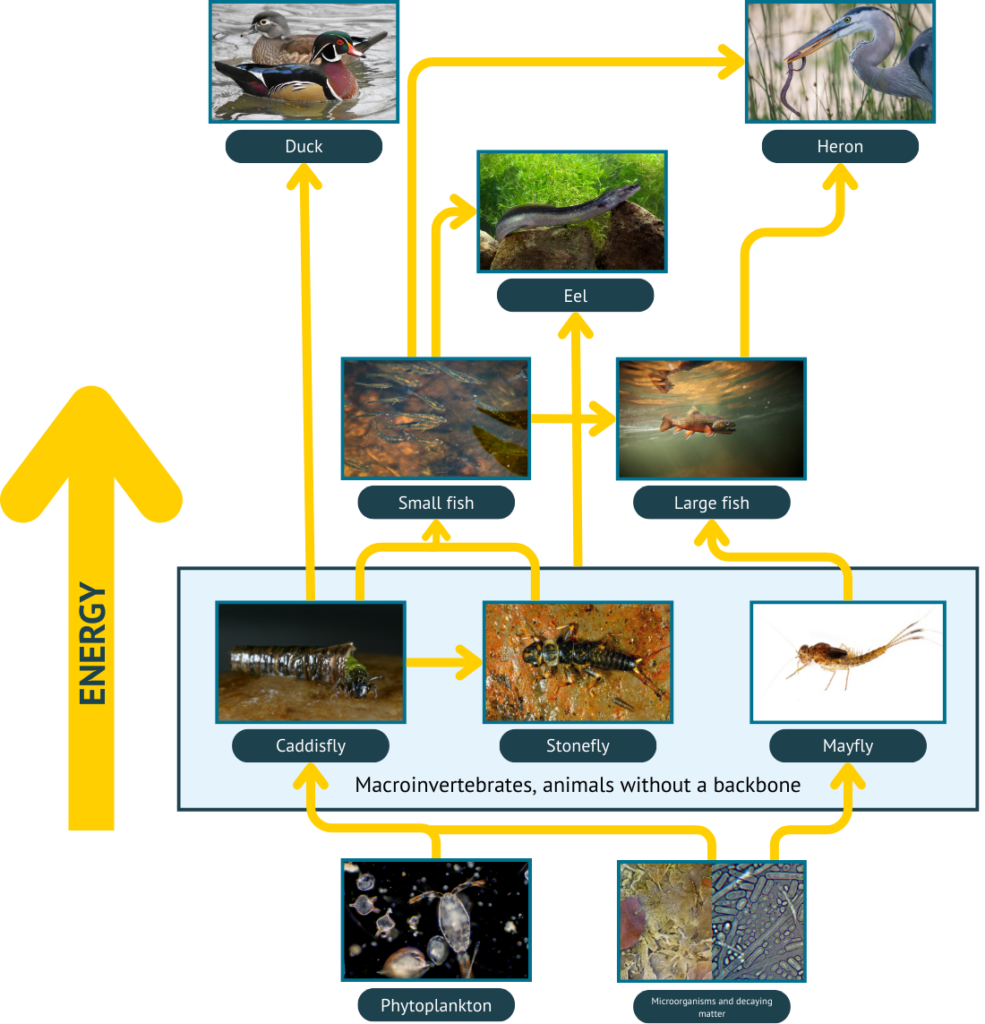
In the river, juvenile herring eat macroinvertebrates and are eaten by turtles, larger fish, and birds. In the ocean, adult herring are a keystone species, serving as an important food source for larger fish and marine mammals. And each spring, river herring were once a treasure trove of nutrients for the indigenous Native Americans who stewarded this land. European settlers learned from the indigenous Pawtucket people and took advantage of the abundant herring run too. In those days, fish were measured in barrels. One barrel would amount to about 1,000 river herring. The herring were so abundant that they were buried in corn fields for use as fertilizer.
Fun Fact: To this day, the Town of Ipswich has a law on the books about “hobbling” pet dogs near corn fields. To “hobble” a dog is to tie up one of its legs so that it moves more slowly and can’t stabilize itself enough to dig. This was put into practice around corn fields so that dogs wouldn’t dig up any buried fish. Read more at Historic Ipswich.
But something changed for the river herring in the Ipswich River and in other rivers on the coast of Massachusetts. Today, we no longer count river herring by the barrel. Instead, volunteers count individual fish as they swim up the fish ladder at the Ipswich Mills Dam.
Over the last 30 years of fish counts, we have recorded between 100 and 3,000 river herring making their way into the Ipswich River each spring.
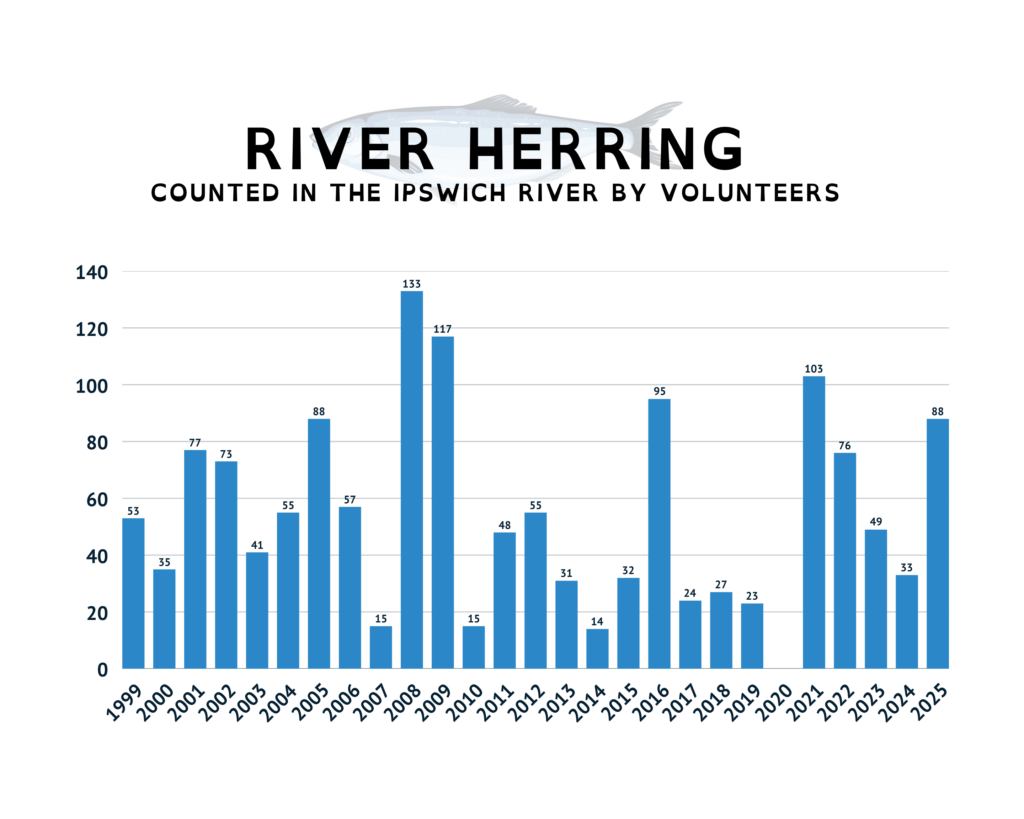
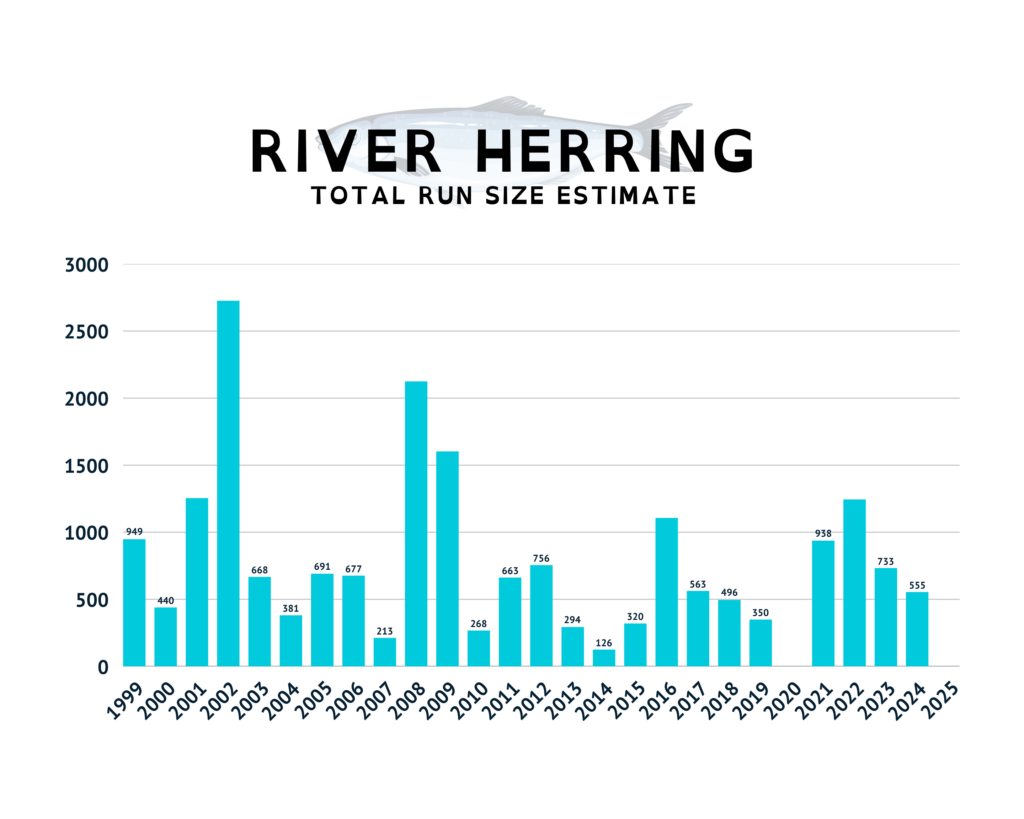
Estimated river herring runs in the Ipswich River have declined from ~4,000,000 fish in pre-industrial times to ~400 fish today.
There’s more. Though river herring have declined in all coastal rivers in Massachusetts, the problem seems to be most severe in the Ipswich River. The Ipswich River’s closest neighbors, the Parker River and the Essex River, have larger herring runs each spring.

What could have caused the decline in river herring in the Ipswich River? Did their food source disappear? Did new predators wipe out their population? What happened to their spawning habitat?
And – once we know what caused the river herring to disappear from the Ipswich River – what can we do to bring them back?
Gathering Evidence: Habitat Quality
Volunteers have been collecting water quality samples at several sites in the Ipswich River for decades. (Check out our RiverWatch data to dive deeper into years of water quality monitoring.)
Water temperature and dissolved oxygen are two factors that river herring are very sensitive to. Herring eggs need to be in water between 10-14 degrees Celsius in order to hatch. Adult and juvenile herring need water to have at least 6mL dissolved oxygen in order to breathe.
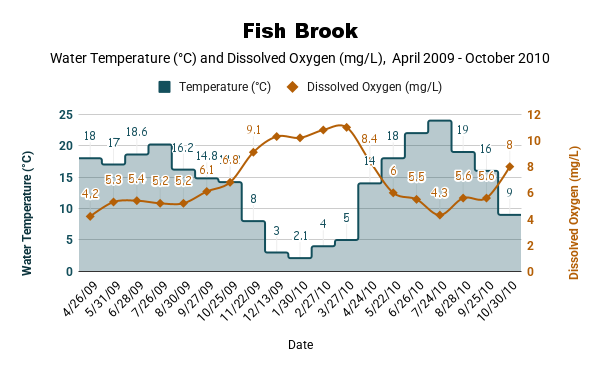
Looking at the chart for the Fish Brook sampling site: In the months of April, May, and June (spawning months), was the water temperature in the appropriate range for river herring eggs to hatch? In the months of June, July, August, and September, was the dissolved oxygen level in the appropriate range for juvenile herring to breathe?
Notice that water temperature and dissolved oxygen have an inverse relationship. Warmer water has a lower capacity to hold dissolved oxygen. Colder water can hold more dissolved oxygen.
Although we don’t have enough data points to draw conclusions with certainty, we can see a trend across IRWA sampling sites over the last 30 years that matches up with what climate scientists have observed across the globe. On average, our waters are getting warmer. Could this be because of climate change and global warming? Could there be additional factors at play?
Gathering Evidence: Human Impacts on Streamflow
Imagine it’s a hot, sunny summer day. Now, imagine you have filled up two buckets with cool water. One bucket is about halfway full, and the other is full to the brim. If you leave these two buckets outside in the sun for an hour, will the water in each bucket be the same temperature? How will the water temperature have changed?
Maybe you have experienced this before, and you know that the bucket with less water will have warmed up more quickly than the bucket that is full to the brim. Knowing what you know about the relationship between temperature and dissolved oxygen, you might also be able to guess that the bucket with more water will be a lower temperature and will be able to hold more dissolved oxygen.
If you were a fish, would you rather be stuck in the half-full bucket or the full bucket?
How does this relate to the river? Water levels in the river fluctuate with the seasons. Spring usually brings the most precipitation and the fastest flows, while we often see slower, lower water in the summer. As climate change brings bigger swings between heavy precipitation and very dry periods, these patterns are becoming less predictable. So, what can humans do to keep the river from drying up? Is this even in our control?
To answer this question, we can look at how much water humans are taking from the Ipswich River each day, each season, and each year. The Ipswich River system provides drinking water to about 350,000 people and businesses. Some communities get their water from a surface water reservoir. For example, Salem and Beverly have been getting their drinking water from Wenham Lake for over 100 years – and the oldest pipes connecting the lake to the cities were made from wood! The residents of Boxford, on the other hand, use groundwater wells. All of the water in the Ipswich River watershed system is like a big cup, and each well or pipe drawing water from the system is like another straw in the cup. We’re all sipping from the same source.
Are we sipping, or are we gulping?
Where does your water come from?
The Ipswich River has made the America’s Most Endangered Rivers list twice because of its problems with low flows. IRWA estimates that a sustainable water budget for the Ipswich River is about 40 gallons per person per day. But most communities use, on average, over 60 gallons per person per day – and that’s just an average! We all tend to use more water in summer months.
Waters are warming up on average across the globe – but that’s not the end of the story for coldwater fish. We can keep water cooler here in the Ipswich River by using less of it, especially during the summer months.
Gathering Evidence: Physical Barriers to Spawning Habitat
In 1839, Henry David Thoreau (famous for writing “Walden”) took a canoe trip with his brother, and wrote down many of his thoughts and observations. Musing on the Merrimack River (a close neighbor to the Ipswich River and another historic homeplace of the Pawtucket people), Thoreau lamented:
Salmon, Shad, and Alewives were formerly abundant here, and taken in weirs by the Indians [indigenous Pawtucket people], who taught this method to the whites [European settlers], by whom they were used as food and as manure [fertilizer], until the dam, and afterward the canal at Billerica, and the factories at Lowell, put an end to their migrations hitherward; though it is thought that a few more enterprising shad may still occasionally be seen in this part of the river. (source: “Saturday”, A Week on the Concord and Merrimack Rivers)
Thoreau observed a phenomenon that is still a hot topic today: the negative impact of human infrastructure, like dams, on migrating fish.
IRWA advocates for dam removal whenever possible, because a free-flowing river is the best way to let fish get into their preferred spawning habitats. However, depending on the site, there can be alternatives for when dam removal isn’t possible or when the owner of a dam doesn’t want to remove it. If they are well-designed, these alternatives can let some species of fish find a way up past the dam.
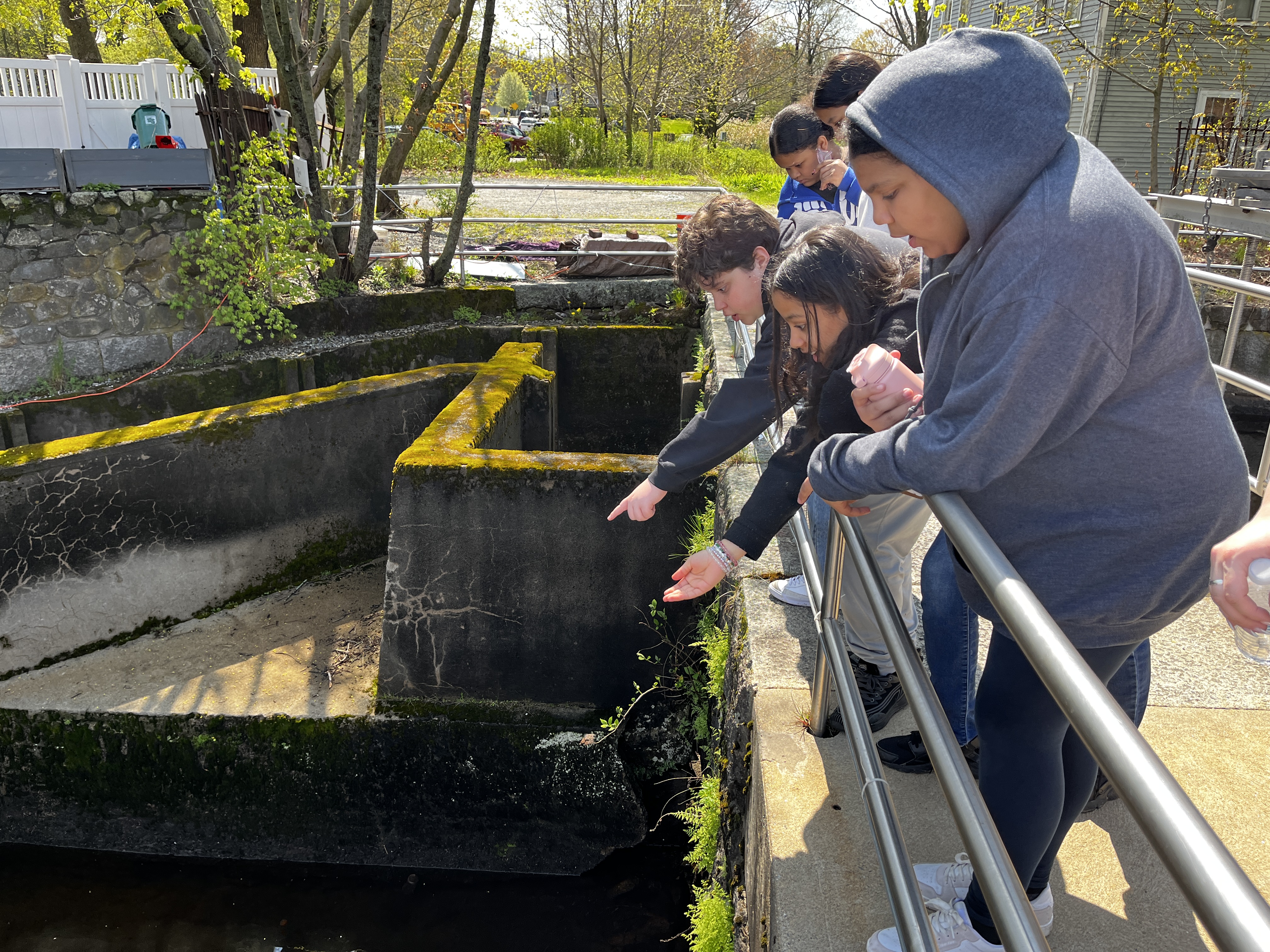
In the classroom, we ask students to think about how they would design a way to get fish up past a dam. While putting together creative prototypes, they discuss potential problems, imagine what fish would enjoy, and critique each others’ designs.
So, what do you think? What other research questions should we be asking? And what can we do right now to bring river herring back to the Ipswich River?
What we’re doing:
- Dam removal and mitigation strategies
- Culvert assessments and improvements
- Ongoing water quality monitoring and fish counts
- Drought Bill advocacy
- Encouraging young people to pursue conservation careers
This blog post is adapted from the educational content of our 7th grade Resilient Rivers program: “Where did the river herring go?”
If you would like to get involved, you can volunteer to bring this program to 7th graders across the North Shore! Or, bring it to YOUR students!