Hello everyone! My name is Hannah Steeves, and I am one of IRWA’s High School Interns this summer. Two weeks ago, I spoke with one of my legislators about a bill regarding stormwater management and Combined Sewer Overflow issues in my home town of Lynn. As part of my preparation, I was able to learn more about exactly why Kings Beach has such prevalent issues with unsafe bacteria levels in the water. I also noticed that many members of my community were unaware of the sources of the problem, possible solutions, and the meaning behind the beach closures seen throughout the summer. This inspired me to launch a project of my own, focusing on distributing educational materials to the locals of Lynn and Swampscott, primarily through utilizing the Swampscott Block Party. As it turns out, there are many very recent and fascinating shifts in efforts to protect the beach, some of which I was lucky enough to be able to participate in first-hand.

Above is the setup I put together using a spot in a booth I operated at the block party! It was small, but it was enough to pull in an almost constant stream of questions, concerns, and interests from my community.
I’ve been personally working on the zines, or small books, for a small while now, with many of them being made with seed paper covers (not pictured.) This handmade recycled seed paper contains the seeds of native plants and is able to serve as a cover for the zines now and plantable material later. The goal of this approach is mainly to help with stormwater runoff issues in the area by trapping rain water and helping to filter pollutants before runoff enters the sewer system. Each book contains hand drawn visuals explaining the series of events that lead to the pollution of the beach. Also pictured are flyers for my sister Maya’s photo walk!
I made about 48 zines for the day, and by the end of the four hours I had very few left. This same setup came with me the following week to the Swampscott farmers market. The highlight of both events for me was answering questions and hearing from those who are familiar with the beach or with similar issues in their communities. I spoke to people from Revere, Lynn, Swampscott, Boston, and Marblehead, with some folks being from as far as Maine! Many people noted the shifts in the quality of the water, sharing their observations of the signage changes as well as their own anecdotes of the invisible danger of polluted water.
With the success of my seed paper efforts, I created my own activity for Interns visiting from Groundwork Lawrence. Each participant learned about issues local to me and to themselves, as well as how native plants can aid efforts to mitigate these issues. They then went on to make seed paper of their own! I am happy to say it was a big hit with this group.

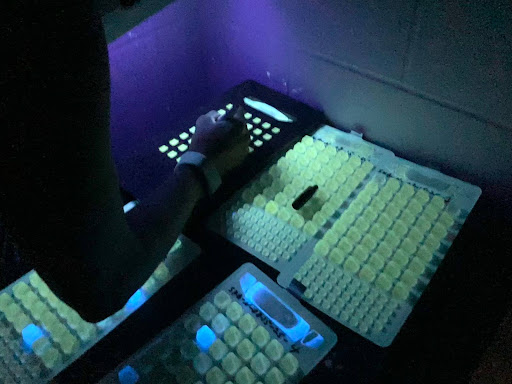
Also following the block party, I was intrigued by a booth I had seen about an organization called “Save Kings Beach”. Upon further research, I learned that they had formed a new local lab overseen by Northeastern University, focusing on more frequent water quality testing for the coastlines of Lynn and Nahant. I reached out to them and connected with Andrea Amour, who invited me to join her for a visit and a demonstration of their testing routine.

From wading into the water to get the samples to looking at yesterday’s results, I found the experience very informative! With all of the current changes in how our local government is approaching water quality issues, it is encouraging to see that work is being done to collect this data and use it to both inform and to discuss our path forward.
Throughout the last few weeks it has been wonderful to see support for my local coastline represented in my community, through local policy, via scientific efforts, and in our youth. I am so glad to be able to help address such an emergent issue and to see real change!