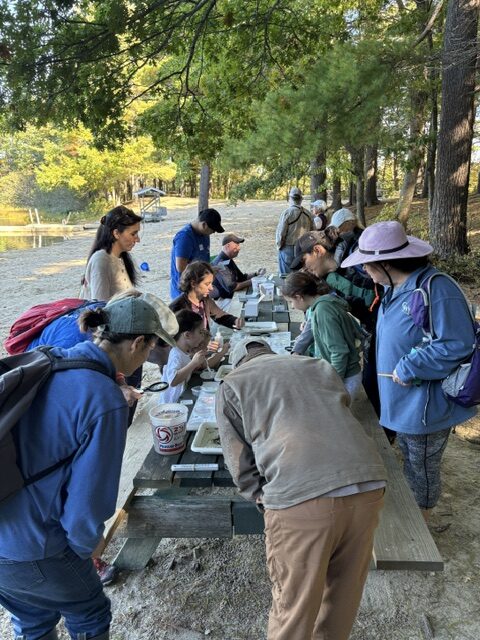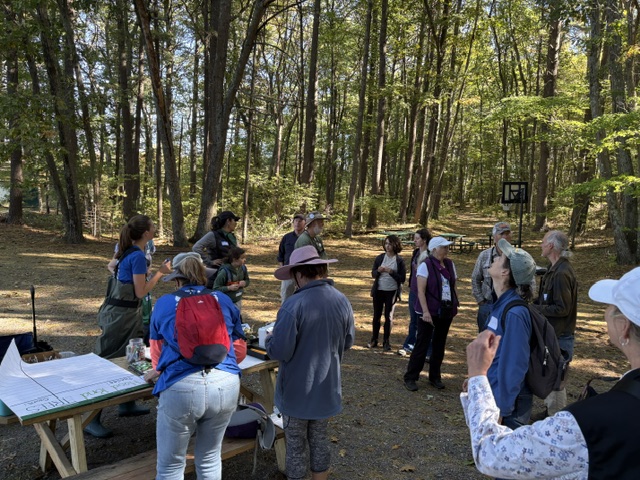
On Saturday, 10/3, we had a fun BioBlitz event at Hood Pond in Topsfield! After some last-minute rescheduling in anticipation of the late September nor’easter, we were worried that nobody would be able to make it – but a small crowd of nature lovers, with an age range of probably 60 years, spent two hours in the woods sharing their knowledge of local plant life and exploring the wonderful world of pond invertebrates. Participants came from a variety of backgrounds and knowledge levels. To paint you a picture, the group included: the owner of a native plant nursery (check out Oakhaven Sanctuary in North Reading), a Scouts leader, some very knowledgeable elementary schoolers, an iNaturalist ambassador, and a toddler in waders who picked up the word “mayfly” very quickly.
We began our BioBlitz with a tree survey and collectively documented 10 tree species. The most common species found were Eastern white pine and Northern red oak, followed closely by white oak. We also discovered red maple, white spruce, scarlett oak, black oak, beech, pignut hickory, and witch hazel, with a bonus find of maple leaf viburnum (technically a shrub).
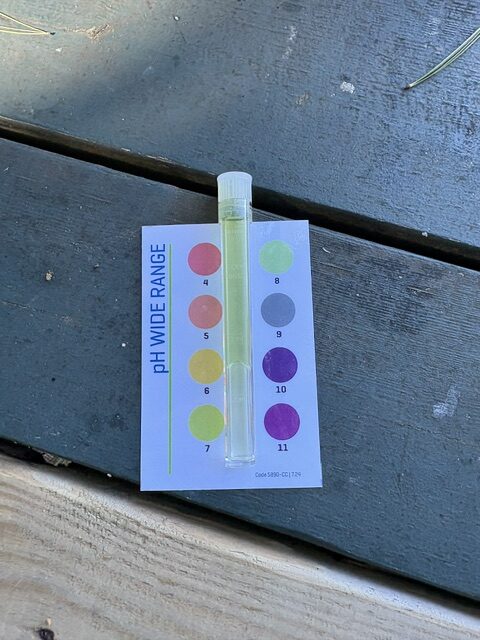
After our tree survey, we made our way to the shores of Hood Pond to take a look at water quality and macroinvertebrate life. We documented phosphates at about 2 parts per million (ppm). A measurement of phosphates above 0.03 ppm can contribute to increased plant growth. While this concentration of phosphates in the pond does not directly affect aquatic organisms, excessive plant and algae growth can cause oxygen levels to drop dramatically; and that spells trouble.
We did find a number of macroinvertebrates living in Hood Pond, and our youngest participants spent a long time sorting and exploring dozens of bugs. The most common invertebrates found were scuds (order Amphipoda), and larvae in the mayfly order which were most likely small square-gilled mayflies (Ephemeroptera Canidae). Though mayflies as an order are one of the three indicator groups for water quality (the others being stoneflies and caddisflies), the small square-gilled mayflies are more tolerant of poor water quality than other mayfly families. They prefer slow-moving water and often spend time either climbing aquatic plants or burrowing in sandy substrate, so it’s no surprise that we found them in a pond. If you’re interested in learning more about these bugs, check out Macroinvertebrates.org.
We had plans to conduct a bird survey at the end of our BioBlitz, but we were all so mesmerized by our pond invertebrates that we simply couldn’t get to it! However, we did see a large bird of prey flying above, heard a variety of small songbirds in the woods, and heard the distinct squawk of a blue jay. I guess we’ll just have to return to Hood Pond another time!
Many thanks to the Topsfield Beach Association for the use of Hood Pond’s facilities and support of our project. You can check out the Friends of Hood Pond group at https://friendsofhoodpond.org/ if you would like to get involved in its preservation. Thanks also to the Massachusetts Environmental Trust, which has generously supported this year’s BioBlitzes and 7th grade Resilient Rivers programs in schools across the watershed. You can support MET by purchasing a specialty license plate for just $20 a year! Learn more at https://www.mass.gov/orgs/massachusetts-environmental-trust