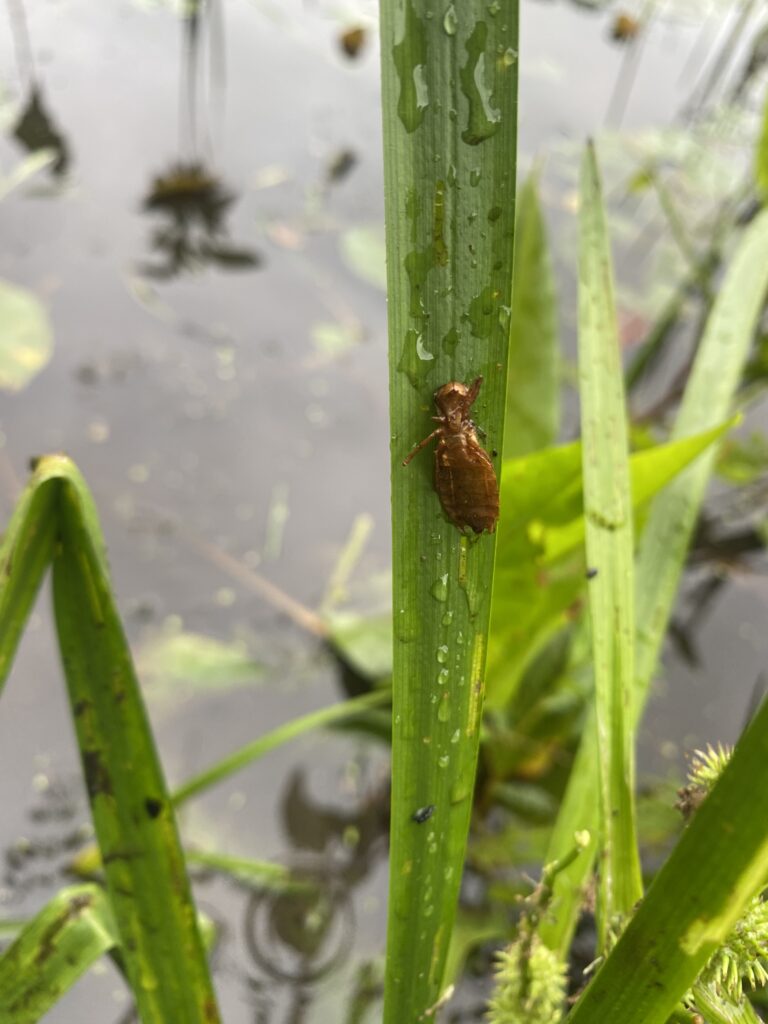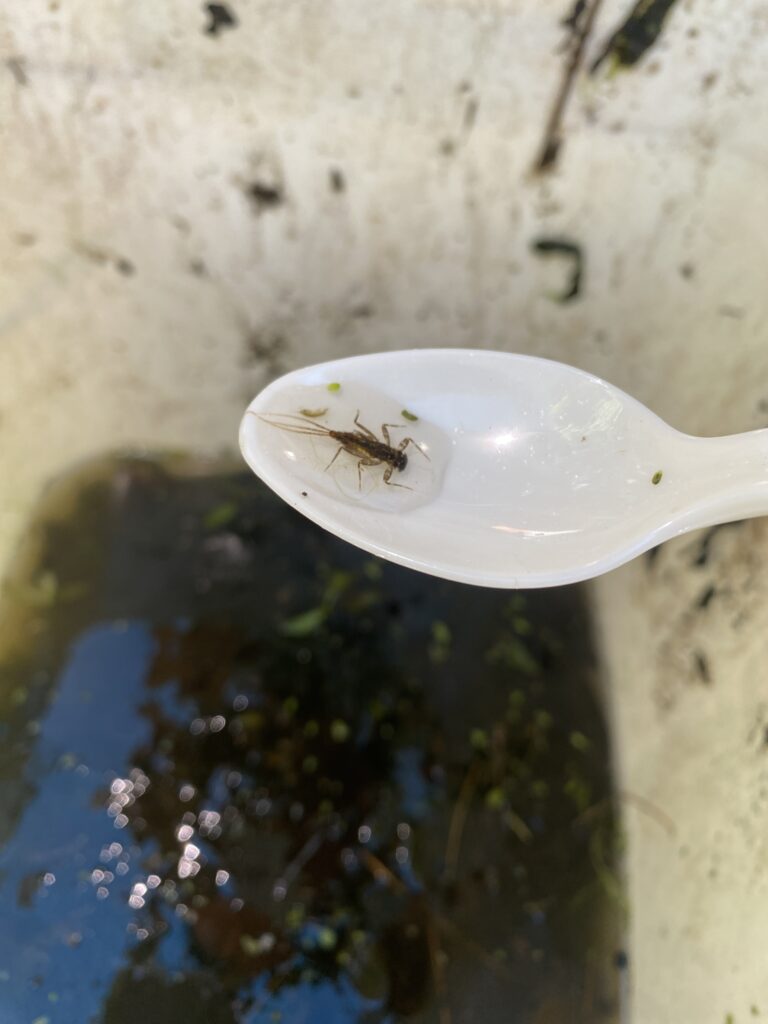
So, you want to know: what are macroinvertebrates? Think of them as the unsung characters in the river’s story—the bugs and slugs at the beginning and end of energy cycles, the foundation of the food web, and the tiny creatures that help us read the river like a book. At IRWA, we pay close attention to the macroinvertebrates of the Ipswich River because they have a lot to tell us.
Let’s start with a little vocabulary.
- Benthic means living at the bottom of a body of water.
- Macro means you can see it without a microscope.
- Invertebrate is simply an animal without a backbone.
- Bioindicator is an organism so tuned in to its environment that when something changes—pollution, habitat disturbance—they’re the first to show it.
Put together: IRWA samples benthic macroinvertebrates because they are bioindicators of stream health.
Some of these “macros,” like leeches, aquatic worms, and left-handed snails, can survive even in poor water quality. Others, like right-handed snails and certain fly larvae, are much more delicate. If they’re missing, it’s a warning sign that the river isn’t doing well.
The stars of the macroinvertebrate world are the EPT orders: Ephemeroptera (mayflies), Plecoptera (stoneflies), and Trichoptera (caddisflies). These three groups are especially sensitive to water quality, making them gold standards for monitoring stream health.
Even their names tell stories:
Ephemero- means fleeting. Adult mayflies live only a day or two, but their larval stage lasts nearly a year, and that’s when we find them in the river.
Pleco- means braided. Many stonefly wings are patterned with beautiful, vein-like designs. Ironically, some don’t fly at all. As larvae, stoneflies cling to rocks to avoid being swept downstream—hardly graceful athletes, but striking in their own way.
Tricho- means hair. Caddisflies are little architects, producing silk from their mouths. Some use it as tether lines, some as fishing nets, and some as glue to build protective cases from sand, leaves, or twigs—tiny works of art drifting in the current.
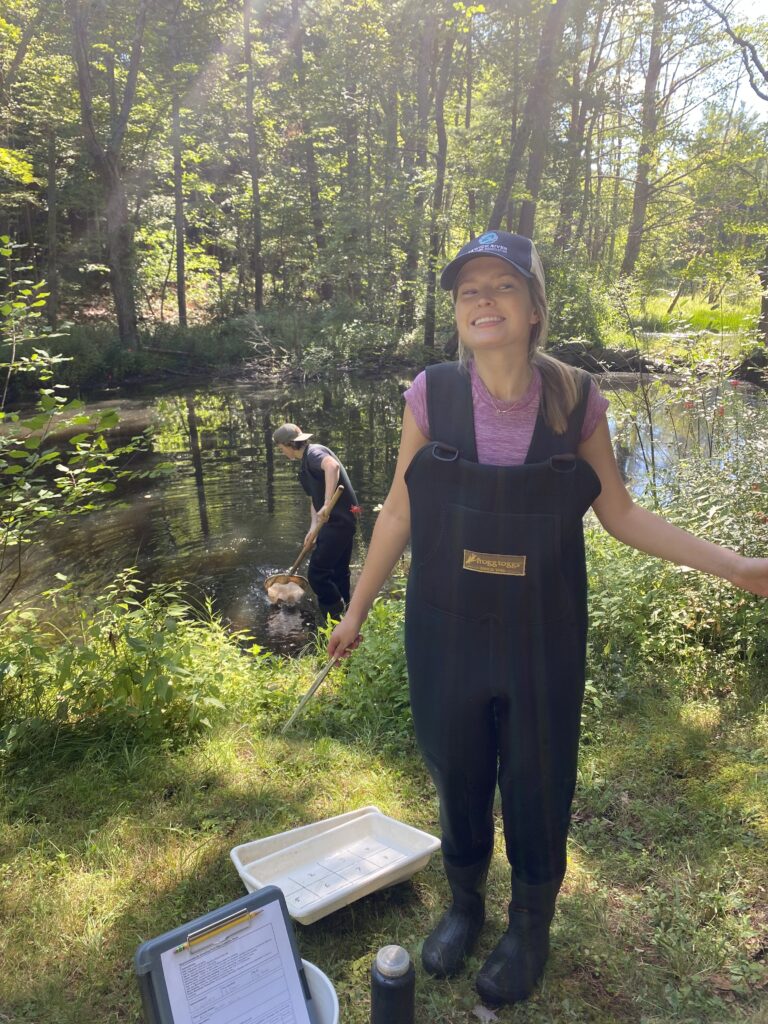
Despite being “macro,” these critters aren’t always easy to see. A dragonfly larva might be an inch long, but other larvae are just millimeters in size. Collecting and identifying them requires patience, many hands, and a careful plan. At IRWA, we follow detailed procedures laid out in our Quality Assurance Project Plan (QAPP) to make sure what we learn from them is accurate.
And what do we learn? We learn the river’s story. Benthic macroinvertebrates show us what’s thriving, what’s struggling, and whether pollution or habitat changes are taking a toll. They are the river’s storytellers, whispering about its health long before humans would notice trouble.
Want to meet them yourself? Join our annual fall training on Saturday, September 27th, 10am–noon. Volunteers of all ages are welcome (minors just need an adult).
Curious right now? Check out our macroinvertebrate data dashboard! Or, explore Macroinvertebrates.org for close-up looks at these fascinating creatures. Teachers: ask to borrow our hands-on macroinvertebrate activities, or use the Leaf Pack Network’s virtual stream study as a flipped-classroom lesson before heading into the field.
Though tiny, benthic macroinvertebrates connect us to the river in big ways—helping us listen, learn, and protect the waters that sustain us all.