Hi, I’m Jacob Nevins, and as part of my work with my internship with IRWA this summer, I have been combing through decades of old newsletters from our first in 1976 all the way to now. With IRWA’s 50th anniversary approaching, this archive project has become a better way to understand the story of the river and the power of the people who organized to make IRWA what it is today.
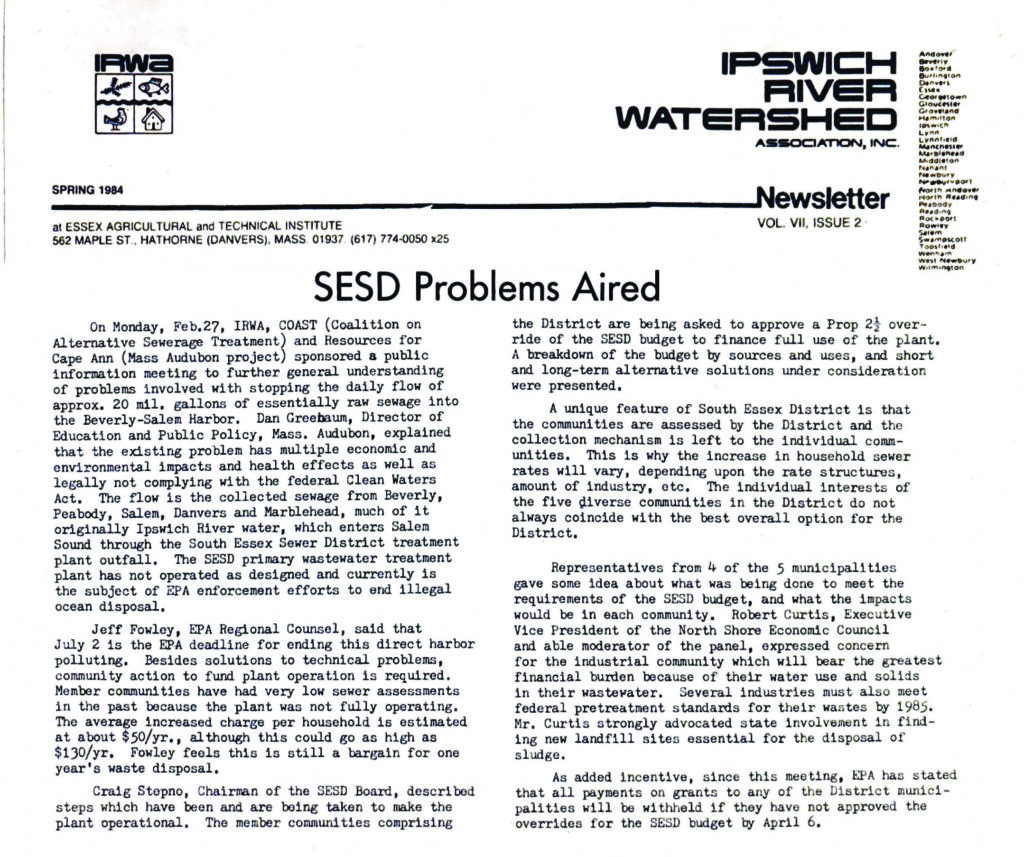
One of the more interesting finds came from our Spring 1984 newsletter. In an article titled “SESD Problems Aired,” IRWA reported on a public meeting it co-sponsored about stopping the daily flow of approximately 20 million gallons of what was essentially raw sewage into Beverly-Salem Harbor. The sewage came from Beverly, Peabody, Salem, Danvers, and Marblehead, and the newsletter notes that much of it was originally Ipswich River water before entering Salem Sound through the South Essex Sewer District (SESD) outfall.
Reading that today feels especially important. Recent sewage issues in Haverhill have reminded many people how quickly wastewater failures can affect rivers, beaches, shellfish beds, public health, and entire downstream communities. The 1984 newsletter shows that IRWA and its partners were raising these same kinds of concerns decades ago: clean water, public accountability, infrastructure, enforcement, and the health of connected waterways.
The archive also shows that public pressure mattered. Our Fall 1985 newsletter reported that, after an EPA order, the SESD plant began primary treatment in July 1984. The update also said Salem Harbor was “noticeably cleaner” and that EPA denied a request to discharge partially treated sewage through a pipe near Marblehead Neck. It was noted that the EPA actions were brought about partly through the efforts of COAST, of which the IRWA is an active member.
So as we prepare to celebrate 50 years of IRWA, these newsletters are helping preserve the stories behind that work. They show an organization that has long served as a watchdog, educator, advocate, and gathering place for people who believe clean water is worth fighting for.
Well done, Jacob! Thank you for highlighting the crucial importance of IRWA through the decades! Keep up the great work!