
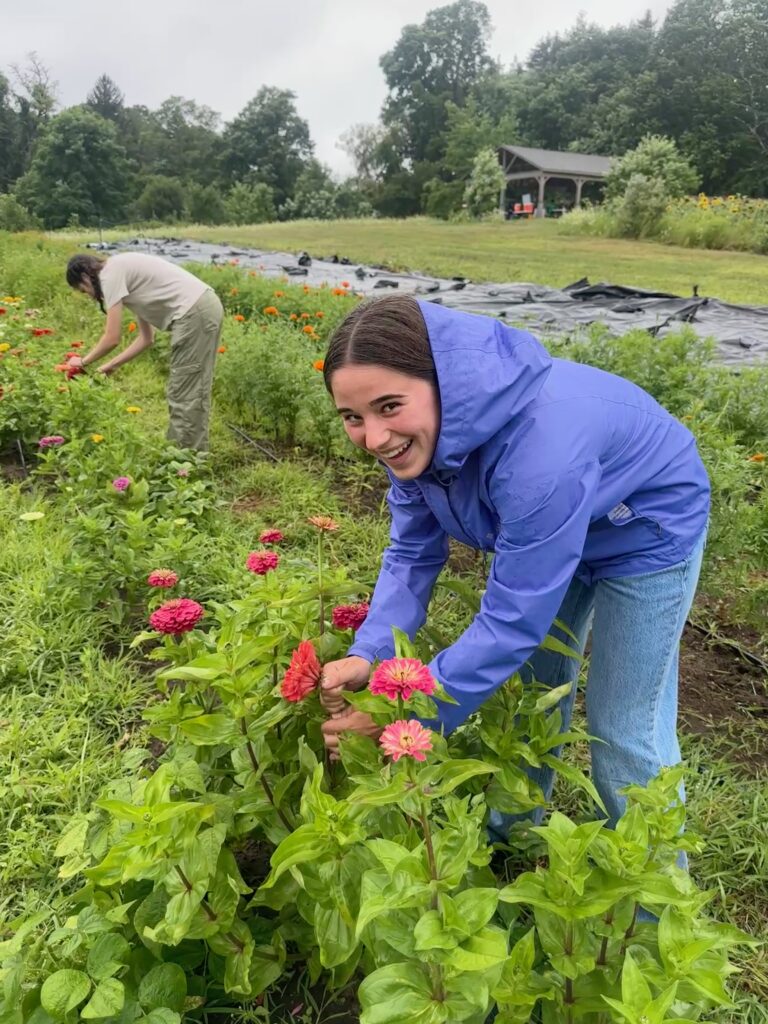
Hi! My name is Olivia McDonald. I am a rising junior at Colgate University, where I major in Environmental Studies. I’m so grateful to have had a chance to be the Resilience Intern this summer. As a part of my work with IRWA, I have been updating the community water use profiles for each town in the Ipswich River watershed. The data has been collected from 2013 to 2025 and can tell us important information about the health of our river. As temperatures increase and droughts become more severe each year, this data shows how towns have made changes to their water usage to conserve Ipswich River water.
Residential water usage is responsible for on average, more than 50% of total water consumption. The town that had the lowest residential gallons per capita per day is Ipswich with 42 gallons. This is well below the state standard of 65 gallons and nearing meeting the Ipswich River Watershed Association’s target of 40 gallons! This is especially important data because residential consumers can play a huge role in reducing the town’s total water consumption. Ipswich is a great example of a municipality that is implementing water conservation which helps protect the Ipswich River.
The towns that have reduced their overall water use over the past decade are Danvers, Ipswich, Lynn, Lynnfield, and Wenham. Lynnfield’s 2025 water use is the lowest since IRWA data analysis started in 2013. In 2024 and 2025, Danvers had the two lowest water usage years recorded. Wenham’s 2025 water usage was the second lowest since 2013. These communities have made important steps to decrease their total water use!
The graph below shows the 2025 Unaccounted for Water (UAW) rates for communities. UAW is water that is lost or untraced before it reaches the consumer, and oftentimes shows the need for improvements in leak detection and infrastructure upgrades. The only towns that are below the 10% Massachusetts Standard are Danvers and Wilmington.
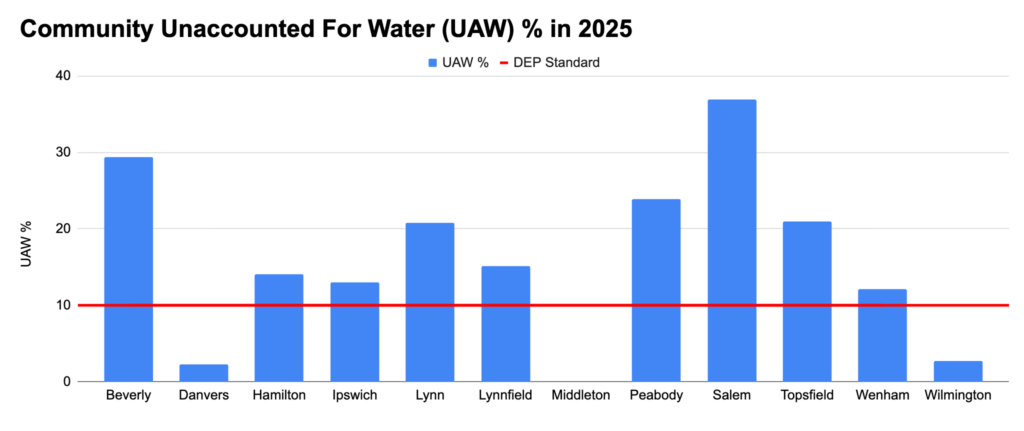
While many communities have made meaningful progress in reducing overall water use, the UAW data highlights an important opportunity for continued improvement. Every gallon saved helps protect the Ipswich River, particularly during the summer months when water demand is highest and streamflows are at their lowest.
Water conservation is incredibly important for the health of the Ipswich River, and residential consumers can play a huge role in reducing the town’s total water consumption. Check out https://www.ipswichriver.org/water-conservation/ to learn more about your community’s water usage!
Working on these community water use profiles has given me a greater appreciation for the effort that municipalities, water departments, and residents are making to protect this valuable resource. It has been rewarding to see how data can tell the story of progress, but also identifying areas where more work is needed. I am grateful to IRWA for the opportunity to contribute to this project, and I hope these profiles will continue to help communities make informed decisions that support a healthy and resilient Ipswich River watershed for years to come.